I've personally tested and reviewed more than 30 of the best hiking boots while hiking 17,000 miles (and counting) in the past fifteen years. Plus, I'm the former footwear manager at Appalachian Outdoors, Gearhead® Expert at Backcountry, and certified brand expert. In other words, I know how the best hiking boots fit, which hikers they work for—and don't work for—and how they stack up to each other. My professional recommendations break down the best hiking boots by fit, weight, and recommended use.
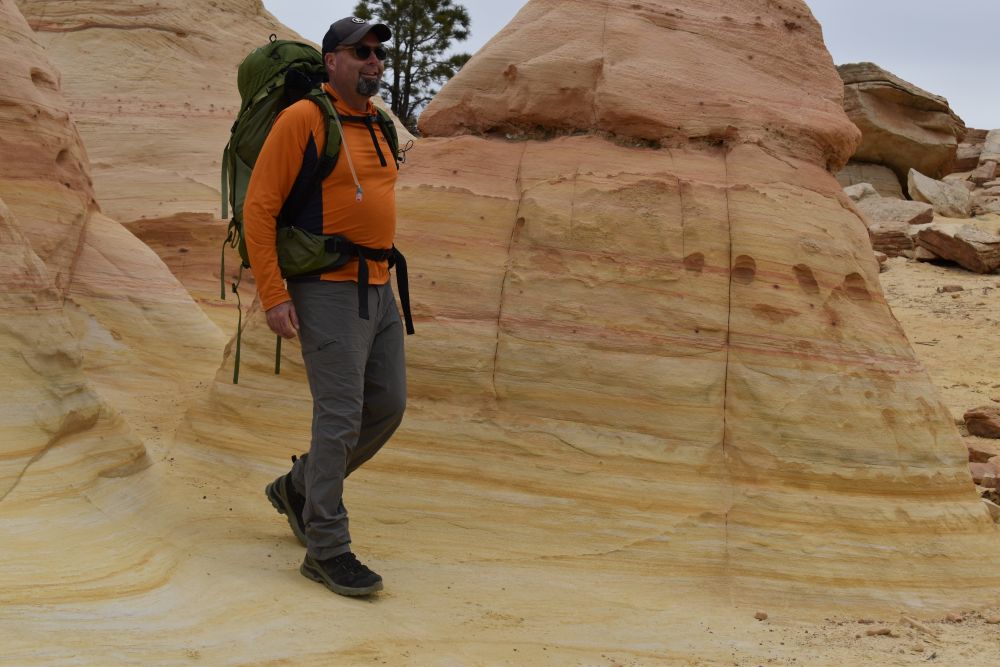
Testing the new Salomon Quest 5 hiking boot in Spring, 2026
This post includes affilate links, including the links above. If you buy something after clicking on a link, the retailer may share a small percentage of the sale with Hiking Feet. That's free for you—and supports this site's free and independent content.
Best Lightweight Hiking Boots
SALOMON X ULTRA 5 MID GTX
Best Hiking Boot for Stability and Agility
Main Benefits:
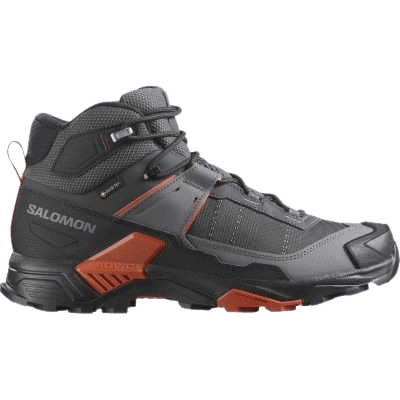
I've hiked more than 1,000 miles in Salomon's X Ultra hiking boots because they're lighter than the average hiking boot but still can handle harder hikes. Last updated in 2025, the Salomon X Ultra 5 Mid doesn't have bomb-proof ankle support, but its sturdy chassis offers plenty of foot protection and lateral stability. I've sold more Salomon X Ultras than any other hiking boot because of their versatility. Whether you hike easy or tough trails, the Salomon X Ultra 5 is one of the best hiking boots for both stability and agility.
For more, see my full X Ultra 5 review.
Best Fit
Best Match
all-around hiking, moderate to difficult trails
Click on the links below to see size and color options for men and women:
Men's Salomon X Ultra 5 Mid GTX
Check current price, styles, and colors:
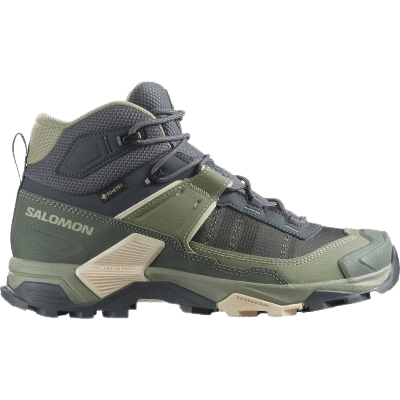
Women's Salomon X Ultra 5 Mid GTX
Check current price, styles, and colors:
TOPO ATHLETIC TRAILVENTURE 2
Fastpacking Boot with a Wide Toe Box
Main Benefits:
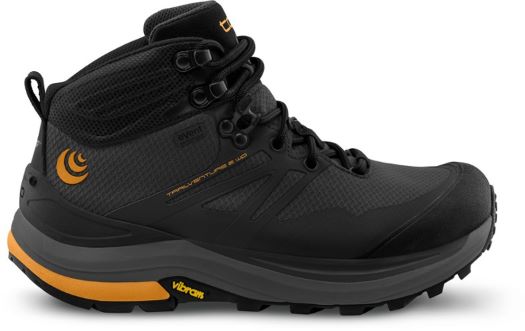
I wore the Topo Athletic Trailventure 2 to win top hiker in the Backcountry Summer Adventure Challenge. Made for fast hikers with light packs, the Trailventure 2 is a lightweight hiking boot with a wide toe box and a natural fit that encourages midfoot landings. (The American Podiatric Medical Association has awarded Topo Athletic its Seal of Approval for foot health.) Like most lightweight hiking boots, its ankle support is limited. But the Trailventure 2 has solid cushioning Vibram outsoles for great traction on mixed terrain. For me, this is the best lightweight hiking boot with a wide toe box. That's why I've personally owned three pairs (and counting).
For more, see my full Trailventure 2 review.
Best Fit
standard to wide feet
Best Match
day hikers, fast-packers, fans of low drop/natural fit
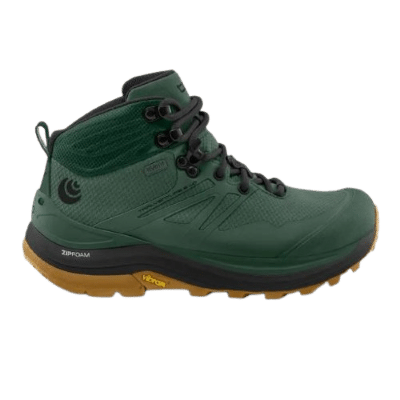
Men's Topo Trailventure 2
Check current price, styles, and colors:
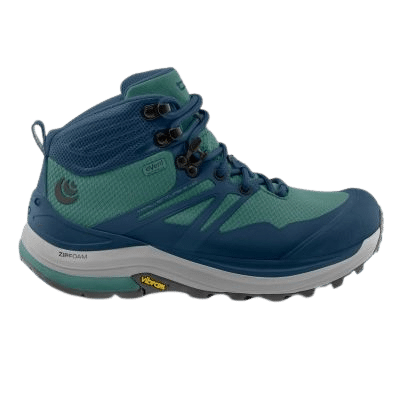
Women's Topo Trailventure 2
Check current price, styles, and colors:
Best Hiking Boots on a Budget
ADIDAS TERREX SKYCHASER AX5 MID
Best Budget Hiking Boot

Main Benefits:
With Merrell and KEEN raising their prices the past few years, the Terrex Skychaser AX5 is about the only decent hiking boot you can buy with a regular price below $150. The AX5 actually has decent support for an entry-level hiking boot and a more contemporary look to boot. During testing, I appreciated its stiffer soles while hiking rocky trails. This boot also boasts GORE-TEX waterproofing, which is hard to find at this price point. As long as you don't have wide feet (adidas runs a little narrow), the Terrex Skychaser AX5 is the best budget hiking boot I've tested and reviewed.
Best Fit
narrow to standard feet
Best Match
day hikers, budget buyers

Men's adidas Terrex AX5 Mid
Check current price, styles, and colors:
Women's adidas Terrex AX5 Mid
Check current price, styles, and colors:
SALOMON X ULTRA 360 MID GTX
Best Value Hiking Boot

Main Benefits:
The Salomon X Ultra 360 is a less expensive variant of the Salomon X Ultra 5 (at the top of this list) that's made for more "all around" use. That said, I didn't detect much of a dropoff in performance when I tested it side by side with the more expensive X Ultra 5. In fact, its tread is more aggressive. Like all X Ultras, the X Ultra 360 provides decent support at a lower weight than most hiking boots—especially at this price point. I also appreviate its GORE-TEX waterproofing and aggressive traction for mud, gravel, scree, and steep terrain. If you want a less expensive hiking boot with enough performance for moderately difficult day hikes, I highly recommend the Salomon X Ultra 360 Mid GTX.
For more, see my full X Ultra 360 review.
Best Fit
standard fit
Best Match
average day hikers, occasional hikers

Men's Salomon X Ultra 360 Mid
Check current price, styles, and colors:

Women's Salomon X Ultra 360 Mid
Check current price, styles, and colors:
Best Midweight Hiking Boots
LA SPORTIVA NUCLEO HIGH GTX
Most Athletic Midweight Hiking Boot
Main Benefits:
- narrow fit (wides available)
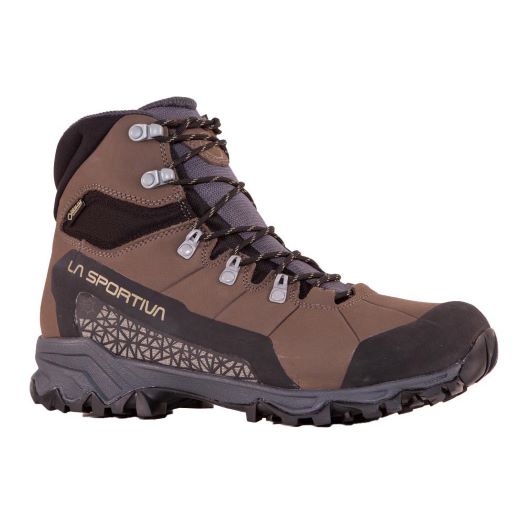
The La Sportiva Nucleo II High GTX is the lightest hiking boot I know with high-cut ankle support. Made with soft, Nubuck leather, this good-looking hiking boot also stands out for its GORE-TEX Surround waterproofing—the most breathable GTX membrane—and for Vibram Megagrip outsoles that excel on wet and dry surfaces. La Sportivas run small and narrow (by US standards), but the Nucleo is available in wide. I personally hiked several of Pennsylvania's best backpacking loops in this boot, including the Black Forest Trail. This is my favorite leather hiking boot for women and lightweight backpacking boot for men.
For more, see my full Nucleo HIgh review.
Best Fit
narrow feet,
wide sizes available
Best Match
moderate to difficult day hikes, light backpacking

Men's La Sportiva Nucleo High
Check current price, styles, and colors:
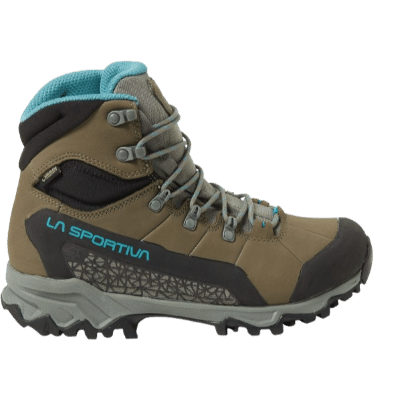
Women's La Sportiva Nucleo High
Check current price, styles, and colors:
OBOZ BRIDGER
Best Midweight Hiking Boot
Main Benefits:
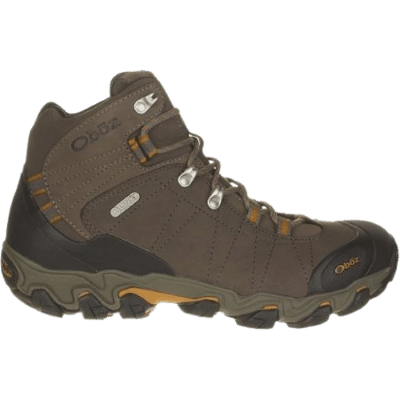
The Bridger is the best hiking boot in the Oboz lineup. Its mix of moderate flex and support hits that sweet spot where it's comfortable enough for day hiking yet strong enough backpacking. It's a brute on the trail yet gentle on your feet, thanks to its expensive insoles, which add cushioning and support. This boot's downhill traction impresses, thanks to its deep lugs and heel brake. The Bridger also the most durable hiking boot I've owned. I've personally hiked more than 2000 miles in the Oboz Bridger over the years. It's my go-to, midweight hiking boot. Plus, it's available in regular and wide sizes, which accommodates many hiking feet.
For more, see my full Oboz Bridger review.
Best Fit
standard fit,
wide sizes available
Best Match
moderate to difficult day hikes, backpacking
Men's Oboz Bridger
Check current price, styles, and colors:
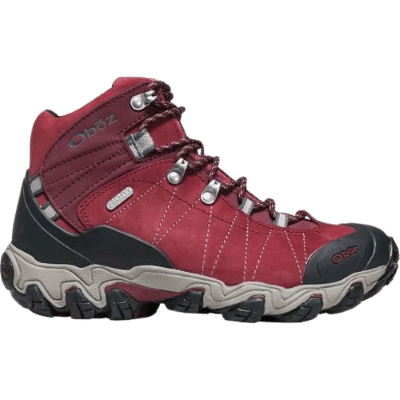
Women's Oboz Bridger
Check current price, styles, and colors:
Best Hiking Boots for Backpacking
LOWA RENEGADE EVO GTX
Best Leather Backpacking Boot
Main Benefits:
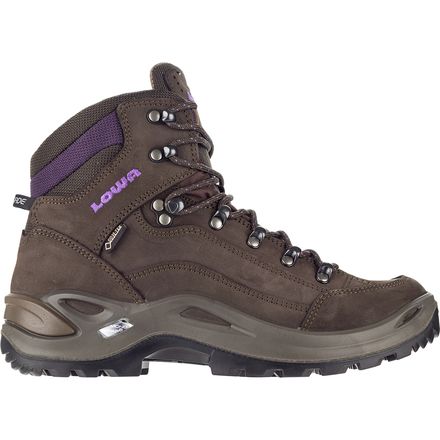
The LOWA Renegade was the first hiking boot named to Backpacker Magazine's Hall of Fame. For the first time in forever, LOWA updated it in 2025 with the new Renegade EVO—which I've personally tested and reviewed. The Renegade EVO rocks protective leather uppers, stiff soles, sturdy PU midsoles, and lateral support to provide backpackers with the stability and protection they need to carry a heavier pack safely. The tradeoff is it's burlier than most day hikers want (unless they have serious ankle issues or hike serious terrain). It may be heavy for day hikes, but the LOWA Renegade EVO is one of the best hiking boots for backpackers and off-trail hikers. That's why I've personally owned three pairs.
For more, see my full Renegade EVO review.
Best Fit
available in narrow, regular, and wide sizes
Best Match
backpacking, all-day day hike, off trail hiking
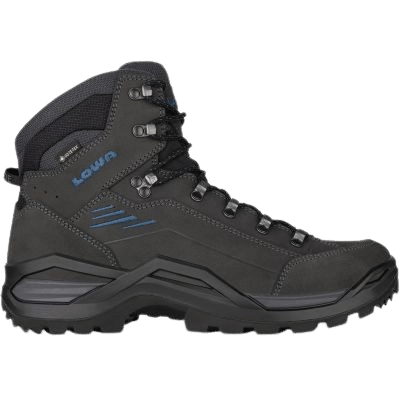
Men's LOWA Renegade EVO
Check current price, styles, and colors:
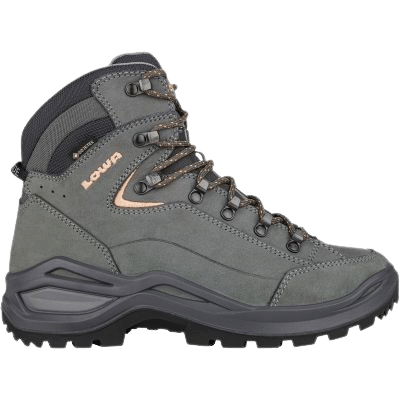
Women's LOWA Renegade EVO
Check current price, styles, and colors:
HOKA KAHA 3
Most Comfortable Hiking Boot for Backpacking
Main Benefits:
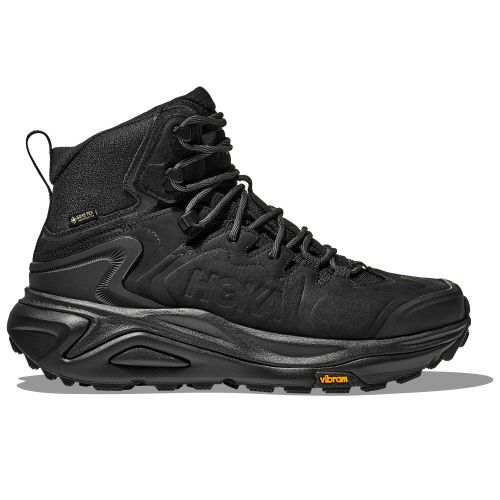
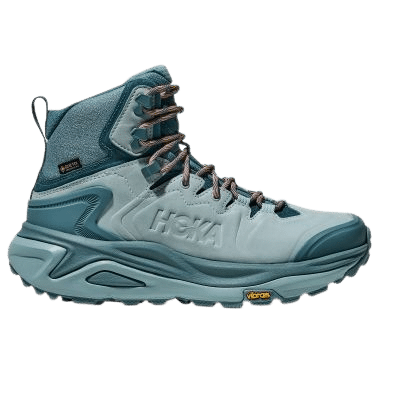
Backpacking boots don't need to be stiff, burly, and brown. The HOKA Kaha 3 is a lightweight backpacking boot with plush cushioning to take the load off our hiking feet. I have personally tested and reviewed this boot, which wears more like a basketball high-top than a backpacking boot. The Kaha is lighter and cushier than the competition. However, it's still a serious hiking boot with full-grain leather uppers, premium Vibram outsoles, and an eVent membrane for air permeable waterproofing. If you like max cushion, the HOKA Kaha is the most comfortable backpacking boot I've worn.
Best Fit
standard fit
Best Match
backpacking
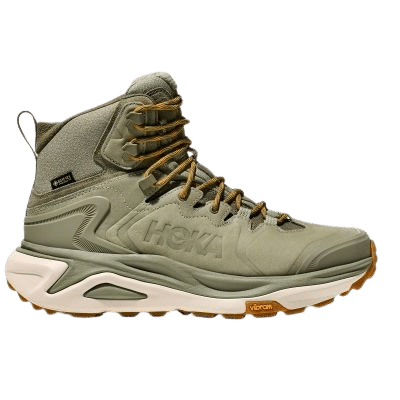
Men's HOKA Kaha 3
Check current price, styles, and colors:
Women's HOKA Kaha 3
Check current price, styles, and colors:
SALOMON QUEST 5
Best Backpacking Boot Overall
Main Benefits:
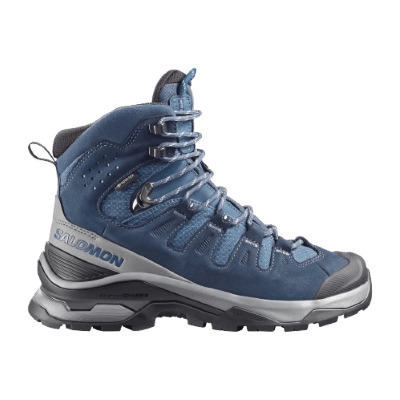
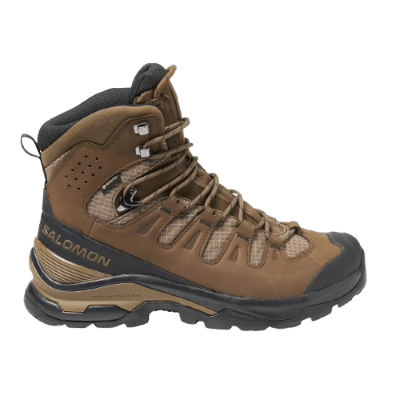
Newly updated for 2026, the Salomon Quest 5 is the latest iteration of a backpacking boots that's dominated awards lists for years. I've personally tested and reviewed three different models, including the new Quest 5. Its ankle support stands out, but it's also quite athletic for a boot made for backpacking. Plus, there's the solid traction, the great locking-lace system, the industry-leading GORE-TEX waterproofing. I've tested and reviewed several backpacking boots and keep coming back to the Salomon Quest for personal use. I personally have more than 1000 miles of hiking and backpacking experience in the Salomon Quest. It's the real deal.
Best Fit
standard fit,
size up full size for wide feet
Best Match
all-purpose backpacking,
off trail hiking
Men's Salomon Quest 5 GTX
Check current price, styles, and colors:
Women's Salomon Quest 5 GTX
Check current price, styles, and colors:
How to Choose the Best Hiking Boots for YOU
The key to choosing the best hiking boots for YOU is to choose a boot that fits your feet and matches your hiking style. That's why it's useless to crowdsource hiking boot recommendations on Reddit and Facebook and why you should ignore the gear review sites that rank order hiking boots (since those rankings ignore fit, your hiking style, your body type, etc.) In contrast to those amateur review sites, Hiking Feet does NOT rank the best hiking boots. Instead, my recommendations highlight (1) the "best fit" and (2) "best match" for every hiking boot I've tested and reviewed.
How to Choose Hiking Boots that Fit YOU
Hiking boots should fit snug (but not tight) with minimal heel lift, no pressure points, and enough room in the toe box to wiggle your toes.
Generally speaking, hikers should choose boots with approximately 1/2" of room between your longest toe and the end of the boot—roughly the width of your finger (men) or thumb (women). This half-inch clearance (1) accommodates foot swelling and (2) prevents your toes from hitting the end of the boot on steep descents (which leads to injuries and lost toe nails).
Your hiking size usually will be a half-size or full-size larger than your everyday shoe size. However, the key is following the advice above, not simply sizing up. For example, the hiking boots in my gear closet include everything from men's size 12 to a 13 wide— because every boot and brand has its own fit.
For more, please check out Hiking Feet's sizing and fitting guide.
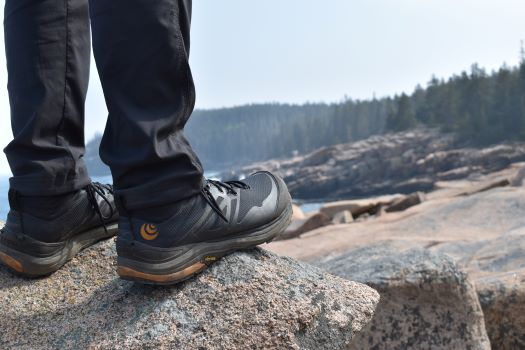
Topo Athletic hiking boots fit my wide feet better than other brands
How to Choose Hiking Boots that Match YOUR Hikes
The next key is to buy hiking boots for the hikes you do most of the time.
If you're mostly a backpacker, you should buy boots for backpacking (not dayhiking). On the flip side, if you mostly hike fast with a light pack, you might prioritize lightweight hiking boots for the weight savings. For a mixture of day hiking and backpacking, you'll find traditional midweight hiking boots like the Oboz Bridger or LOWA Renegade to be the most versatile.
If you mostly hike in areas with tricky traction, you should learn to evaluate hiking boot soles. For better traction on solid rock, for example, focus on hiking boots with softer rubber and wider, shallow lugs. For mud or steep trails with lose sediments, focus on more aggressive tread with angular braking and climbing lugs.
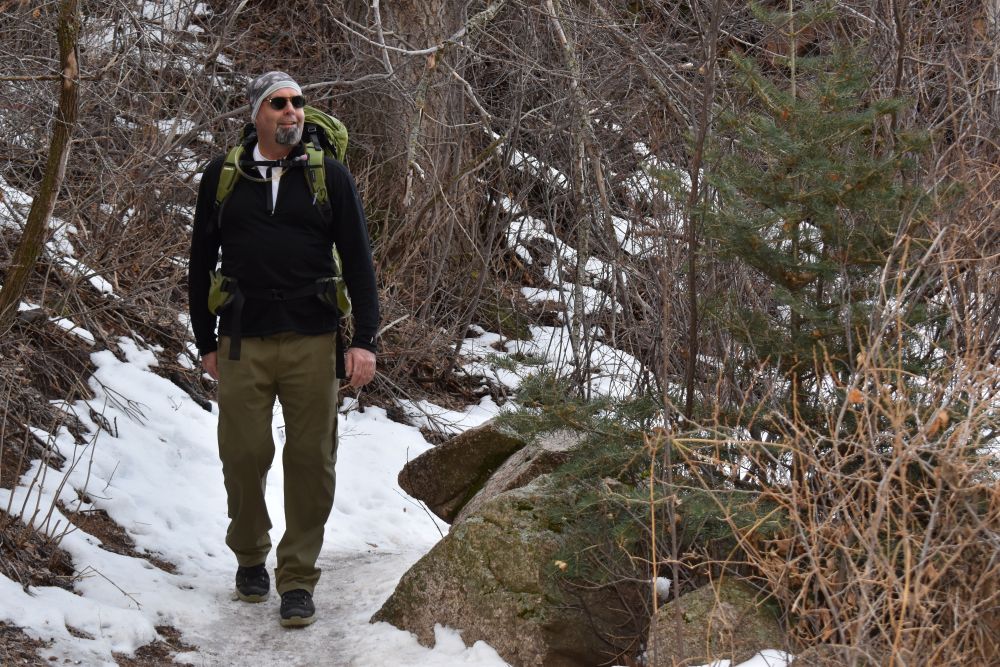
I own the Salomon Quest 5 for backpacking and day hike in other hiking boots
Weighing the Trade Offs
The third key to buying the best hiking boots is to understand the trade offs of different features. One place to start is to ask yourself what's most important to YOU in a hiking boot: support, weight savings, or price.
Most people buy hiking boots for their foot and ankle support. The trade off is that the best hiking boots for ankle support tend to be heavier (due to the added protection) and more expensive.
On the flipside, many hikers today prefer lightweight gear. If you go with lightweight hiking boots for the weight savings, however, the trade off is less foot and ankle support and less durability.
If price is your biggest concern, you can focus on budget hiking boots. The trade off is that most budget hiking boots aren't very supportive. And if they are supportive, that probably means they're heavier than the average hiking boot (because they use cheaper materials). The other trade off is the budget hiking boots generally use cheaper waterproofing and don't last as long as premium hiking boots.
As a general rule, it's usually a good strategy to buy the lightest hiking footwear you can that provides the amount of support you need. Just remember the trade offs: you'll generally lose foot and ankle support—and durability— the lighter you go.
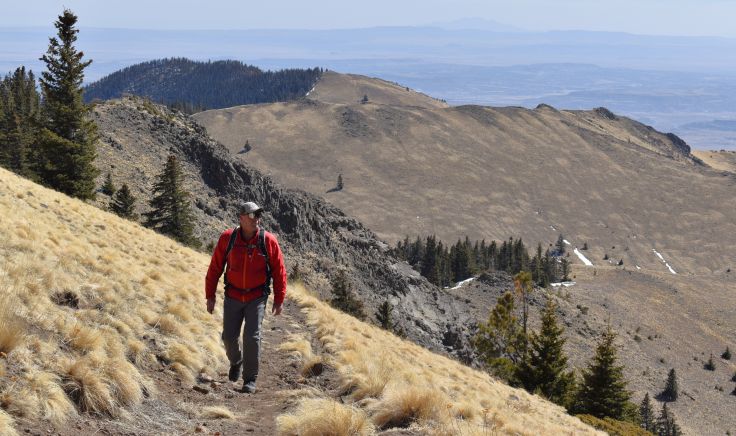
The Salomon X Ultra 5 balances support with weight savings better than most hiking boots
Weight Savings vs. Support
The question is, how much support do YOU need? That depends on your body, how much weight you're carrying, and where you do most of your hiking.
In general, men and women may need MORE support if they're
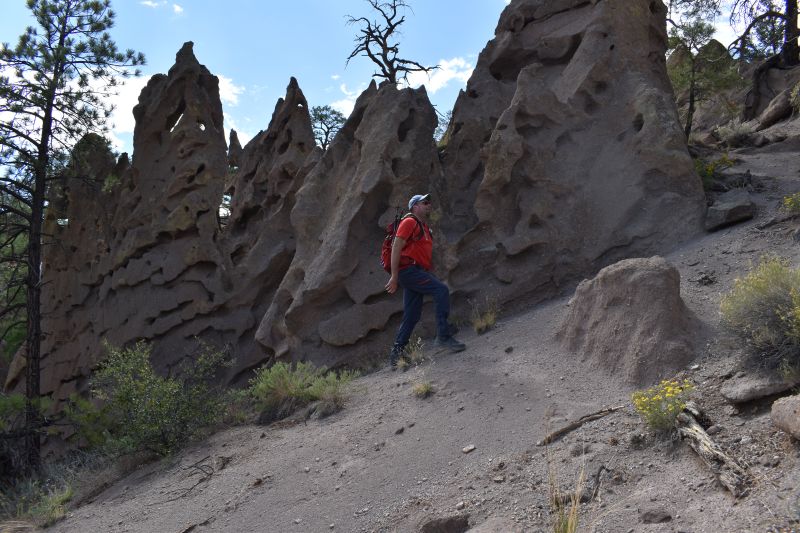
The LOWA Renegade EVO GTX is one of the best hiking boots for ankle support
You may get by with less support if you're
If most of the above are true for you, you might be fine hiking in lightweight hiking boots, low-cut hiking shoes, or even trail running shoes.
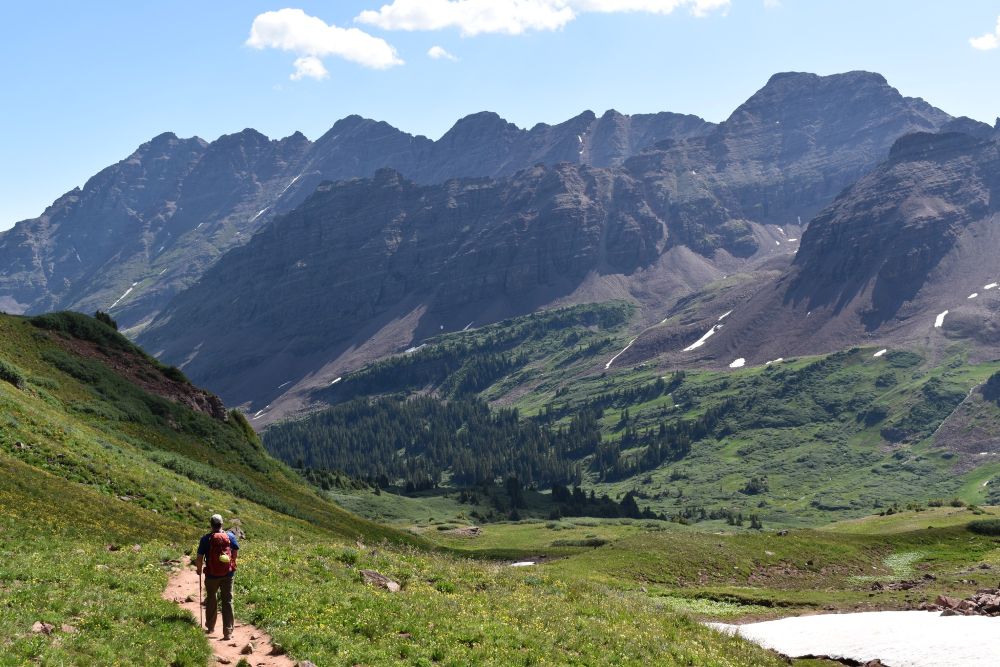
As an experienced hiker with hiker-specific strength, I can hike harder trails in lightweight hiking boots
how to test hiking boots' support
If you're primarily buying hiking boots for the added ankle support, start with these supportive hiking boots. Just keep in mind that many hiking boots today honestly aren't that supportive.
Most people mistakenly believe that any midcut hiking boot provides ankle support. But midcut (or highcut) ankle collars won't do much for you unless they're stiff and fit close. With many beginners complaining about stiff boots and break-in times, many brands (especially in the U.S.) have moved away from supportive hiking boots.
Likewise, many hikers don't realize that a stiffer hiking boot also reduces the risk of ankle injuries. Stiffness increases torsional rigidity—resistance to twisting—that may prevent your ankles from rolling on rocks, roots, sidehills, and uneven ground. The less a boot flexes, the more foot and ankle support.
You can test hiking boot support in person by subjecting boots to the "flex test" and "twist test."
The Flex Text
Evaluate the boot's support by the grabbing it at the heel and toe and forcing the bottom of the boot to bend. Watch to see where the boot flexes and how hard/easy it is to bend the boot from heel to toe.
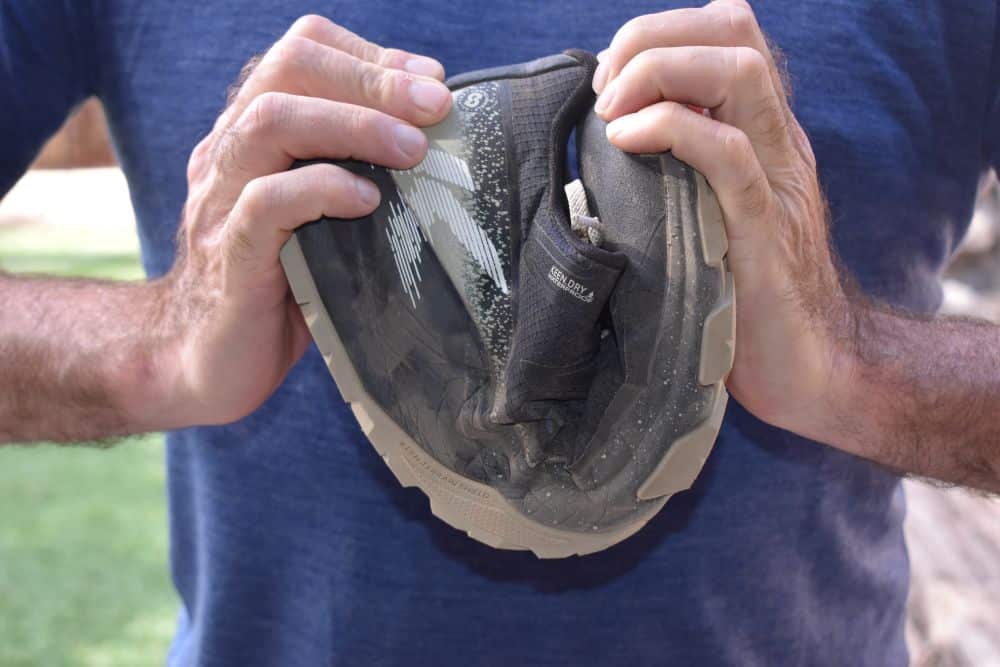
LImited Support: The soles of the KEEN Targhee Apex collapse during the flex test
A boot that flexes easily at the mid-foot (see above) has limited support. Flexible hiking boots may be comfortable for easier day hikes, flat terrain, and well-maintained trails. However, that's less support than many people need for uneven terrain, steep trails, harder day hikes, and backpacking.
A boot that's stiff in the mid-foot with flex-point near the ball of the foot (3/4-length stability plate or chassis) may be sturdy enough for moderate backpacking yet flexible enough for moderate day hiking. This is the sweet spot for many hikers and backpackers.
A boot with little to no flex underfoot (full-length stability shank) provides the most foot and ankle support for uneven terrain and heavy packs; however, the lack of flex may be uncomfortable for day hikers, casual hikers, and easy-to-moderate trails.
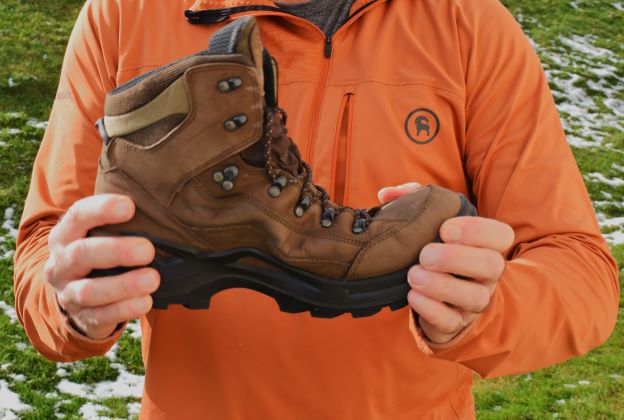
Good Support: the LOWA Renegade barely bends during the flex test
The Twist Test
Evaluate a boot's torsional rigidity— its resistance to side to side twisting— with the "twist test." Grab the toe box in one hand and the heel in other and try to twist the boot (like wringing out wet laundry).
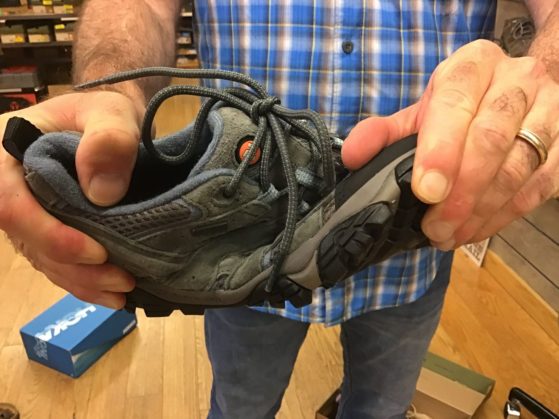
Less Support: the Merrell Moab is a budget hiking shoe that twists easily when tested
The easier it is to twist the boot, the less its torsional rigidity. Hiking boots with limited torsional rigidity won't provide much lateral support for your feet or ankles on uneven ground. They're more likely to collapse or bend over rocks and roots. This may increase your risk for rolled ankles, sprains, and other lower body injuries.
The harder it is to twist the boot, the greater its torsional rigidity. A boot that resists twisting (like the Salomon X Ultra above) provides better foot support and lateral ankle protection, especially on uneven ground.
Each of my recommendations for the best hiking boots provide at least moderate support, including the lightweight hiking boots. The mid-duty hiking boots provide better support, and the backpacking boots provide the best foot and ankle protection for backpackers carrying heavy packs or hikers who mostly hike off trail in mountainous terrain.
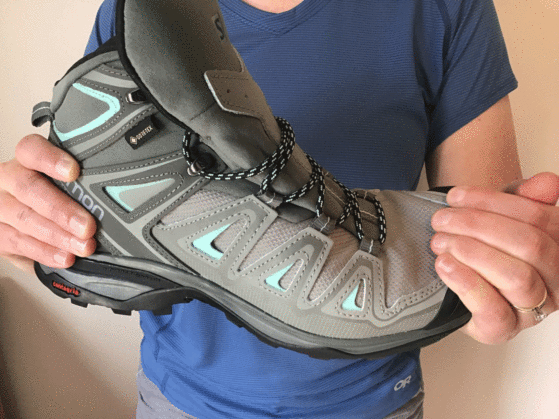
My wife's Salomon X Ultra hiking boot demonstrates good torsional rigidity (limiting twisting)
Buying the Best Hiking Boots
My hiking boot recommendations come from extensive first-hand testing. From Acadia National Park to Australia's Great Ocean Walk, from Colorado's Maroon Bells to Europe's Tour du Mont Blanc, I've tested each hiking boot on this list while hiking 17,000 miles the past 15 years.
If this post has pointed you towards the perfect hiking boots, please consider buying them through the buttons in this post. That's free for you—and may send a few bucks my way to give me a little back for the thousands of unpaid hours I've poured into Hiking Feet's reviews and recommendations.
If this site hooked you up, I appreciate you hooking me up, too!
