The KEEN Seek is the most expensive model in the brand's new line of trail running shoes. Even though the Seek is made for runners, I've spent the past few weeks hiking in it since KEEN is a popular brand with hikers. As part of my tests, I've alternated the Seek with other KEENs—the Roam trail running shoe and Targhee Apex hiking shoe—to compare the models' support, weight, fit, comfort, weather protection, traction, and overall value. My KEEN Seek review shares my personal expeirence to help hikers (not runners) figure out if this new trail running shoe makes sense for their feet and their hikes.
If you're not in love with the KEEN Seek after reading this review, these links can help you find alternatives:

Testing the KEEN Seek off the Piedra Lisa Trail outside Albuquerque, New Mexico
This post includes affiliate links. You can support Hiking Feet's free and independent reviews by clicking on those links and purchasing something. The retailer may share a small % of the sale with Hiking Feet—at no cost to you—which is what keeps this site alive.
KEEN Seek Review
My KEEN Seek review is based on 40 miles of test hikes outside Albuquerque, New Mexico—from fast fitness hikes on the Piedra Lisa Trail (4.2 miles 1265 ft) to a moderately difficult hike up and down the Embudito Trail (8 miles, 2500 ft). By design, I hiked different types of terrain at different speeds, so I could guage how well the Seek performs for different hiking styles.
As always, my reviews are based on my first-hand testing experience and my professional experience in the outdoor industry. I'm a former outdoor gear expert for a billion-dollar retailer and footwear manager at a hiking and backpacking shop in the U.S.

Test hike on Osso Ridge Trail
Support
Compared to other trail running shoes I've tested, the KEEN Seek has average support. You won't confuse it with a true hiking shoe. It's more flexible than stiff underfoot, but I could still hike moderately difficult trails in it.
On moderate trails, like the Pino Trail and Osso Ridge, the Seek's extra cushioning kept my feet supported enough. My feet felt fresh after 8 miles of moderately steep ups and downs on the Embudito trail. I didn't roll my ankles on rocks or uneven steps.
Still, this trail running shoe prioritizes comfort and weight savings over support. Most of the trail runners I hike in have a bit more backbone than the KEEN Seek, including the KEEN Roam.

Weighing my KEEN Seek (US size 12)
Weight
Most of the trail runners I've tested for hikers weigh between 12 and 13 ounces per shoe. My men's size 12 (U.S.) falls in this range at 12.2 ounces on my kitchen scale. This is typical weight for a trail running shoe and more than a half pound lighter than most hiking shoes. Fast hikers with light packs certainly can consider the KEEN Seek as a lightweight option.

KEEN's original fit runs wider in the toe box
Fit
Many people buy KEEN hiking shoes because the brand has a wider fit in the toe box. The KEEN Seek also has a roomy fit that's better for hikers with standard to wide feet. It runs wider than most trail running shoes, but it's not available in wide sizes.
I have moderately wide feet and got a good fit by sizing up a half-size from my everyday shoe size. My best KEEN size is smaller than my hiking size in most other brands.
Max cushion midsoles make the KEEN Seek cushy
Comfort
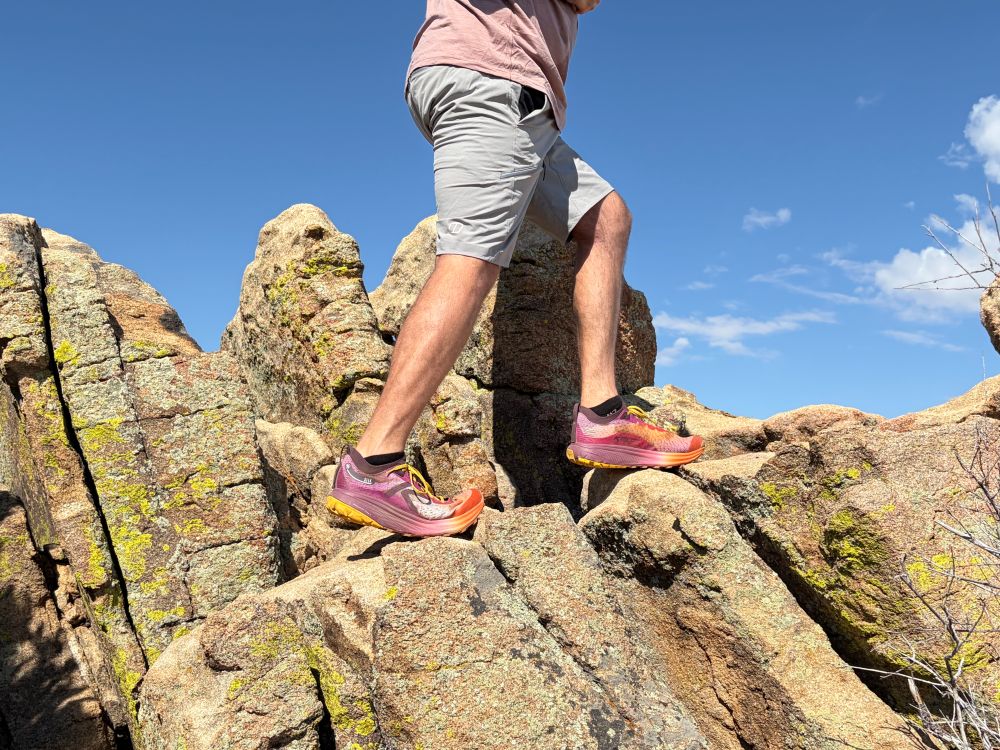
If you prefer a cushy trail running shoe with a wider fit, the KEEN Seek is a comfortable shoe. It's a Max Cushion trail runner with 39 mm of foam under the heel and 33 mm at the toes. (If you care about drop, this shoe's 6mm heel-to-toe drop is significantly less than KEEN's hiking shoes.) I found the Seek softer and less supportive than the Roam—KEEN's other new trail runner. Overall, it's one of the three cushiest trail running shoes that I've tested.
I appreciated the Seek's roomy fit on my test hikes. My feet never complained over 40 miles of testing. Fast-and-light hikers will probably like this shoe's light and cushy feel. If you mostly hike gnarly terrain, you may want a stiffer, more protective shoe for rock gardens.
Another feature to consider is the Seek's sock-light ankle collar. Designed to keep rocks out of your shoes, these collars can feel soft against your ankles (in a good way) but also reduce how much heat and moisture escape. The Seek hiked warmer for me than trail shoes that don't have that sock-like seal around the ankle.

Non-waterproof trail runners wear cooler in the desert
Weather Protection
KEEN does not offer the Seek in a waterproof version, so it's not made for heavy weather. That's true of most trail running shoes. Most people buy them to save weight, not to protect their feet from rain, mud, and show.
I suppose the sock-like ankle collar could keep out a little more mud than most trail running shoes. (I still got sand in my Seeks in spite of that sock-like seal.) But this shoe is better for those who hike dry trails or prefer a non-waterproof trail runner that won't trap water when it does get soaked by rain, sweat, or a stream crossing.

Testing downhill traction on the Piedra Lisa Trail
Traction
I tested the traction of the KEEN Seek on rock, gravel, dirt, scree, and desert crust. I found the traction good on the forest floor—and marginal on more difficult trails. The shoe's moderately aggressive, 4 mm lugs are best for mild to moderate terrain that's not too rocky.
On the Embudito trail outside Albuquerque, the Seek's tread worked well for me when I was hiking up in the Ponderosa pines—even when it was steep. On the slickrock section of the trail, however, I couldn't climb some smooth granite slabs that I can ascend in other hiking shoes. Plus, I took a hard fall while descending gravelly switchbacks because I slipped on the weathered granite. On the Piedra Lisa and Pino trails, I experienced smaller slips, too, especially when descending sandy sections of the trail. On rough rock, the Seek's lugs grabbed too much for me to feel comfortable near dropoffs.
In my experience, this traction is better for the woods than for mountainous terrain.

The women's KEEN Seek is available in 6 different colorways
Value
The Seek is KEEN's most expensive trail running shoe with an MSRP of $185. That's $20 more than the KEEN Roam and $5 more than KEEN's lightest hiking shoe, the Targhee Apex low. It's more expensive than most trail runners I've tested and reviewed, including the HOKA Speedgoat 7—the most popular, max-cushion trail running shoe for hikers. If you love this shoe's look and fit, those extra dollars may be worth it.
Click on the buttons below for current prices and color options:

Men's KEEN Seek
Check current price, styles, and colors:

Women's KEEN Seek
Check current price, styles, and colors:
KEEN Seek: Pros & Cons
Should hikers buy the KEEN Seek?
I recommend the KEEN Seek for day hikers who prefer a soft trail running shoe with a roomy fit for mild to moderate trails.
On the plus side, KEEN Seek is one of the cushiest trail running shoes that I've tested, and its roomy fit adds to its comfort (unless you have narrow feet). It's legitimately lightweight, and I got some compliments on the trail for my shoe's bright colorway. On the downside, the KEEN Seek isn't overly supportive and doesn't have the best tread for mountainous terrain, which is what I hike most of the time. Plus, this shoe is expensive—$20 more than the HOKA Speedgoat 7, which is the most popular trail running shoe for hikers.
If you like what you've read here, please consider purchasing your new pair by clicking on the buttons below. That's free for you but sends a few bucks my way (only if you buy something). Those small commissions keep this site alive and make it possible for me to review new boots and shoes each year.
Men's KEEN Seek
Check current price, styles, and colors:
Women's KEEN Seek
Check current price, styles, and colors:
