It's hard to keep up with all of Salomon's stellar shoes, but the Salomon Genesis is yet another Salomon trail runner that will appeal to many hikers. Made for all-mountain running, the Genesis is softer underfoot than most Salomons while giving men and women enough support for rocky terrain. I've spent the past few weeks testing this shoe with hikers (not runners) in mind. My first-hand Salomon Genesis review gives you the goods on this shoe's support, weight, fit, comfort, weather protection, support, and overall value.
As always, Hiking Feet's reviews are 100% independent (not sponsored posts) and based on my personal experience and professional experience. I personally hike 1000+ miles each year testing and reviewing hiking footwear and previously managed footwear at a hiking and backpacking shop. You can trust my takes.
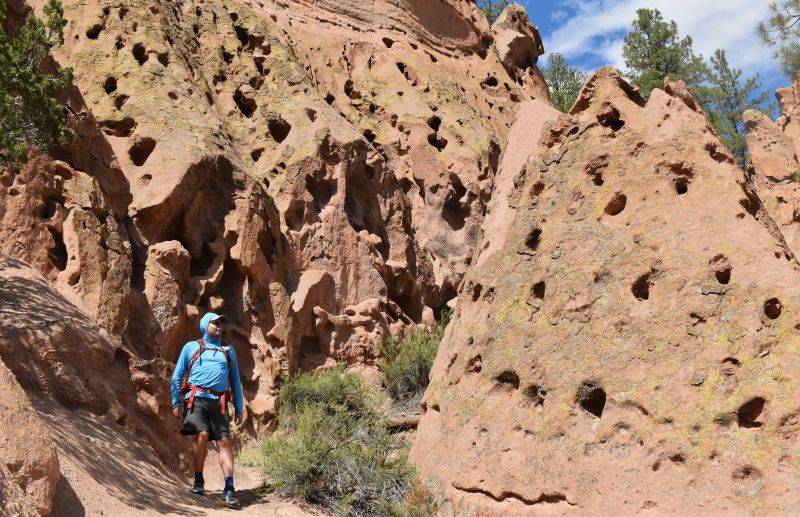
Hiking through New Mexico's hoodoos, tents, and goblins in the Salomon Genesis
This post includes affiliate links. If you click on these links and buy something, the retailer may share a small percentage of the sale with Hiking Feet—at no cost to you. That's a free and easy way for you to support this site's free and independent content.
Salomon Genesis Review
I tested and reviewed the Salomon Genesis in 2025 with a mixture of easy, moderate, and difficult day hikes in the high desert mountains of New Mexico. My test trails include mixed terrain—desert washes, gravelly switchbacks, pine tree forests, slick rock, and tortured volcanic landscapes—to determine the pros and cons of every shoe I test and review. I even got off trail (once by accident) to test this shoe on tougher mountain footing. Keep in mind that the Genesis is made for running, not hiking. But it's made for mountain running, which means it may handle hiking better than many trail running shoes. At least, that's what I was trying to find out in my test hikes. Here's my verdict:

Testing traction & support in the Jemez Mountains
Support
Salomons often stand out for balancing weight savings and support better than other brands, and that's also true of the Salomon Genesis. It's more cushioned than other Salomon hiking shoes and trail running shoes, but its chassis still gives the Genesis a solid-enough base to tackle mixed mountain terrain.
After rolling my ankles several times in the last trail runner I tested, the Genesis handled those same trails without compromising my ankles. It's not as stiff or rigid as most shoes I've tested, but I haven't had any ankle issues in the Genesis, on or off trail. Salomon's activeCHASSIS—a thermoplastic frame—adds lateral support while still allowing the shoe to flex easily around the balls of the foot. In other words, it's a trail runner you CAN hike in.
You won't confuse the Genesis with a true hiking shoe, like the Salomon X Ultra 5. Its level of support is most appropriate for fast hikers with light packs. Still, it earned my trust on mixed mountain terrain.

At 11.6oz, this is the 2nd lightest shoe I've reviewed
Weight
I was not only surprised by the Genesis's better-then-expected support but also by its lighter-than-expected weight. This shoe has more cushioning than most Salomons and more robust-feeling uppers, too. Nevertheless, my men's size 12.5 only weighed 11+ oz/shoe. It's the second-lightest shoe I've tested and reviewed at Hiking Feet—a scant 0.2 ounces heavier than the HOKA Speedgoat. I didn't realize these shoes were this light in my field tests, but the weight savings stood out on the scale.
If you're looking for a lightweight trail running shoe that can handle hiking, the Salomon Genesis should be on your list.

Testing the Salomon Genesis in Albuquerque's Sandia Mountains
Fit
The Salomon Genesis runs true to size with standard width and a standard-sized toe box. In other words, it's not as narrow in the toes as traditional Salomons or extra-roomy. I have moderately wide feet and got a good-enough (but not great) fit by sizing up a full size from my everyday shoe size. Unfortunately, this shoe isn't available in wide (yet)—which would have worked better for me. Overall, this shoe is a good fit for men and women with more typical feet.

The Genesis is more cushioned than most Salomons
Comfort
The Salomon Genesis's best feature could be its comfort. I've sold more Salomons than any other brand, but some people find them too firm or stiff for comfort. That shouldn't be the case with the Genesis.
The shoe's lightweight, optiFOAM EVA midsoles make the Genesis cushier than traditional Salomons. By my standards, the shoe's midsoles straddle the borderline between a max cushion and moderate cushion shoe with a stack height of 34mm (heel)/26mm (toe). Its cushy feel is similar to the adidas TERREX Free Hiker2—one of my top comfort splurges. But the Genesis is much lighter, and much more performance-oriented.
In short, if you're looking for a lightweight, comfort-oriented trail running shoe with a standard fit, the Salomon Genesis should appeal to your hiking feet.

Non-waterproof shoes work well in high desert mountains
Weather Protection
Living in the arid, high deserts of New Mexico, I opted for the non-waterproof Salomon Genesis. As it should, the shoe took on water when I hiked a soggy trail soaked by summer monsoon thunderstorms. That being said, most hikers prefer a non-waterproof trail runner because it wears cooler and dries quicker than waterproof hiking footwear. The Genesis isn't as ventilated as many trail runners I've tested, but my feet were noticeably cooler in the Genesis than they were in the GORE-TEX hiking boots I tested when I wore two different pairs on the same trail in the Jemez Mountains.
If you want a waterproof trail running shoe—for dewy grass or wintry weather—Salomon also sells the Genesis GTX with GORE-TEX ("GTX") waterproofing. GORE remains the industry standard for waterproof and breathable hiking footwear, so the Genesis GTX would be a weather protection plus for cool or wet trails.

Multisurface tread pattern on the Salomon Genesis
Traction
I normally have several nits to pick with trail running shoes, but I didn't experience significant traction troubles in the Salomon Genesis on a wide range of test hikes. This shoe has all-terrain tread with mid-depth 4.5mm lugs and a moderate tread pattern with a mix of sharp edges (for gravel), space between lugs (for mud), and moderately wide lugs (for grip on rocks). I experienced some slight slippage when I hit some slightly wet rocks on La Luz trail outside Albuquerque. Otherwise, the outsoles handled everything I threw at them—from switchbacks to slick rock to sidehills to sandstone and volcanic tuff—without standing out on any specific surface.
If you mostly hike a specific type of spicy terrain, you might prefer a more specialized sole. For example, you might want a shoe with deeper, more aggressive lugs for consistent mud or scree or a shoe with shallower and wider lugs and softer rubber for consistent rock scrambling. However, this shoe's multisurface traction gets the job done on most types of trails without any red flags.

The Salomon Genesis passed all my test hikes
Value
With a MSRP of $150, the Salomon Genesis sits at the average price for today's premium trail running shoes. That's a solid value since my test hikes didn't dig up any dirt on the Genesis. It's a solid trail running shoe. With the outdoor gear market floundering, you might find sale prices at the links below, especially outside of peak season:
Click on the buttons below to see current prices and color options:

Men's Salomon Genesis
Check current price, styles, and colors:

Women's Salomon Genesis
Check current price, styles, and colors:
Salomon Vista: Pros & Cons
Every shoe has its trade-offs, but the pros of the Salomon Genesis certainly outweigh the cons:
Should you buy the Salomon Genesis for hiking?
Based on my first-hand testing, I'm happy to recommend the Salomon Genesis for hikers looking for a lightweight and comfortable trail running shoe that can tackle a range of hikes. I liked it best on my fast-moving fitness hike (until I met a bear on the trail) and on moderate trails with mixed terrain. It's not as sturdy as Salomon's best hiking shoes or as cushy as some max cushion trail runners. But the Genesis tested well across the board, raising no red flags. It's not the best fit for wide-footed hikers (like me) or tough terrain that calls for highly specialized tread. But the Salomon Genesis has enough comfort for travel and everyday wear and enough performance for moderate to difficult hikes. It's a versatile trail runner that should work for many hikers.
Conclusion
In the beginning, Salomon created the XA Pro, and it was good. But the Salomon Genesis may be better. For me, it runs neck and neck with the Thundercross for the title of Salomon's best trail runner for hikers.
But the key is buying something that fits your feet and your hiking style. If you're looking for something different, please browse my Salomon brand review, my reviews of the Salomon Thundercross or Ultra Glide 2, my hiking shoe recommendations, or my picks for the Top 10 trail running shoes for hikers.
If this review has you stoked on the Genesis, please consider purchasing your pair through the buttons below. That's free for you, but it may send me a few bucks from Backcountry or REI. Those small commissions keep this site alive and give me a little bit back for the thousands of unpaid hours I've spent testing footwear and publishing free content for hikers I'll never meet.
If this site hooked you up, I'd appreciate you hooking me up, too. Thanks!
Men's Salomon Genesis
Check current price, styles, and colors:
Women's Salomon Genesis
Check current price, styles, and colors:
