The Mammut Aenergy Hike Low is a new hiking shoe for 2025. Its technical specs look great on paper—and it comes in some sick colorways—but how does it perform in the field? To answer this question, I scored a pair to test and review in New Mexico's Sangre de Cristo and Sandia Mountains. Over the past month, I've put my pair through some test hikes that I handpicked to evaluate this shoe's support, weight, fit, comfort, weather protection, traction, and overall value. My Mammut Aenergy Hike review gives you the goods based on my first-hand experience and my professional experience working in the outdoor gear industry.
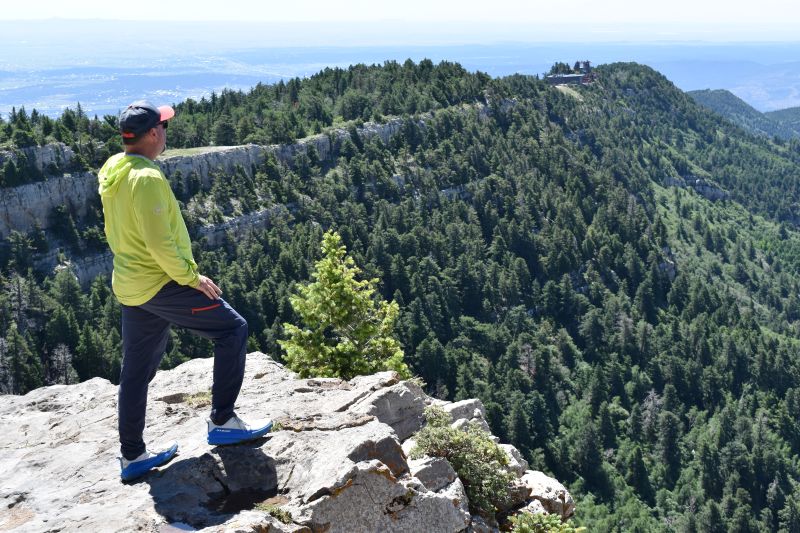
Breaking in my Mammut Aenergy Hike Lows on the Sandia Crest Trail overlooking Albuquerque
This post includes affiliate links. If you click on these links and buy something, the retailer may share a small percentage of the sale with Hiking Feet—at no cost to you. That's a free and easy way for you to support this site's free and independent content.
Mammut Aenergy Hike Low Review
I tested and reviewed the Mammut Aenergy Hike in the summer of 2025. For my test hikes, I chose an easy trail (4-mile loop on the Sandia Crest trail), two moderate trails in Embudito Canyon (each approximately 5 miles with 1500 ft elevation gain), and a difficult day hike in the Pecos Wilderness (14 miles, 3000+ elevation gain). Testing hiking shoes over a range of trails and varied terrain helps me pinpoint each shoe's best use and its specific pros and cons.
My Mammut Aenergy Hike review is based on the non-waterproof, low-cut version (since I live in the high desert). Mammut also makes a GTX (GORE-TEX) waterproof version, a burlier Aenergy Mtn (Mountain) version, and a taller mid-cut version. My nephews think my powder blue and white pair looks sick, but I prefer Mammut's other colorways—from the muted Strata-Black to eye-popping Black-Mammut Red or Marine-Dark Glacier Blue.
It turns out these shoes aren't only good-looking. They're pretty solid in the field, too. Here's my in-depth, first-person take on the Mammut Aenergy Hike:
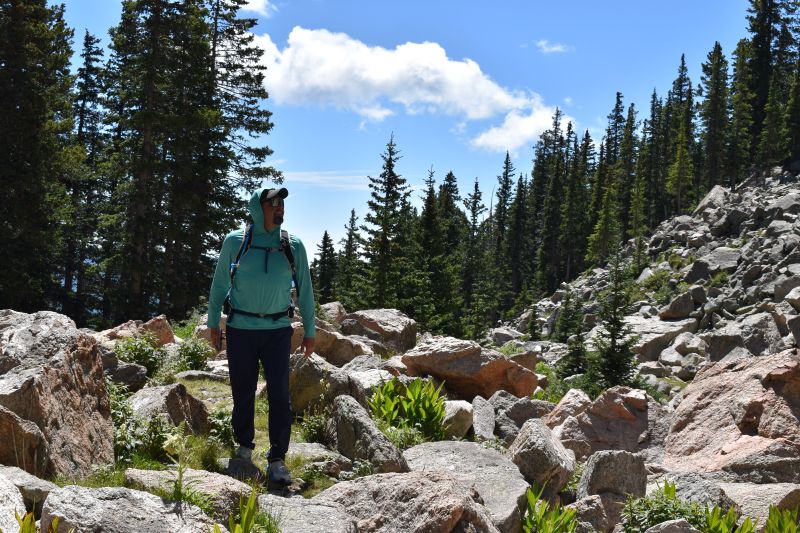
Testing the Mammut Aenergy Hike in New Mexico's Pecos Wilderness
Support
The Mammut Aenergy Hike has decent support for such a lightweight shoe. It's stiff from the heel to my foot's natural flex point, where there's a little bend right where there should be. The thick, max cushion midsoles—35mm of cush under the heel and 28 under the toes—not only adds comfort but also foot support and torsional rigidity.
My feet especially felt this support on my 14-mile hike to Lake Katherine in the Pecos Wilderness. The Aenergy Hike held up to plenty of rocks and almost 4000 feet of ups and downs. Even so, this lightweight hiking shoe is a better match for average day hikes or fast hikes over moderate terrain.

The Mammut Aenergy Low weighs less than 2 lbs per pair
Weight
These days, brands will call almost every hiking shoe "lightweight"—no matter what it weighs. In this case, though, the Mammut Aenergy Low really IS a lightweight hiking shoe. Even in a men's size 13, my pair weighs less than two pounds. It's one of the lighter hiking shoes I've tested and a good 5 ounces lighter than the average hiking shoe in my size.
If you're looking for a lightweight hiking shoe, the Mammut Aenergy should be on your radar. Its weight is especially impressive when you consider how much cushioning Mammut packed into it.
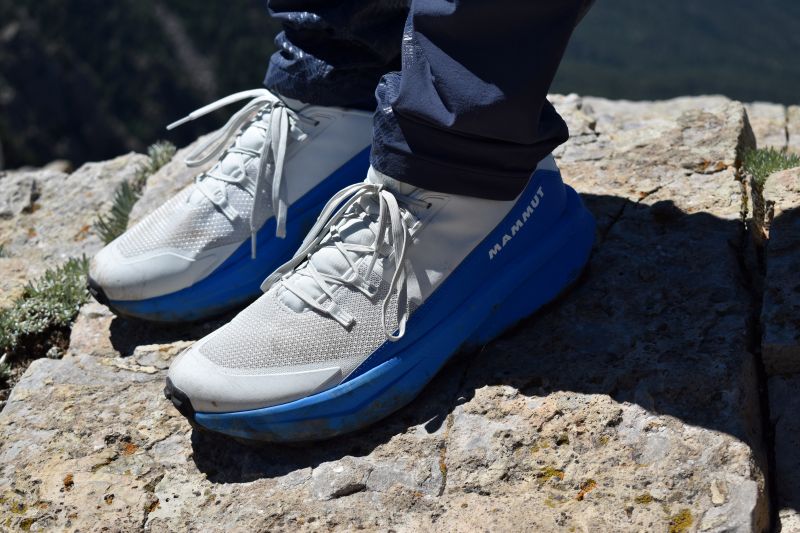
Mammut shoes don't run as narrow as most European brands
Fit
Mammut doesn't seem to run as narrow as most European brands (which is why some European customer reviews find it runs large). However, I needed to size up extra to get a good fit for my wider feet. My everyday shoe size is a 11.5 US, and both the Mammut Aenergy and Mammut Sertig II fit me well in a size 13. Hikers with more standard-sized feet should be fine sizing up a more typical 1/2 size to full size for hiking.

Mammut's max cushion midsoles soften the ride of these light but sturdy shoes
Comfort
If you prefer a light and highly cushioned hiking shoe, you'll probably find the Mammut Aenergy Hike comfortable. It's cushier than most hiking shoes I've tested and reviewed. Plus, I felt fairly light on my feet on my test hikes, at least on easy to moderate terrain.
At the same time, I did experience plenty of pressure along the instep of my right foot during my test hikes. At first, I wondered if this was a stability shoe with aggressive arch support. However, I think it was the protective leather rand on the outside of the shoe that formed a painful pressure point. Since this only happened on one foot, this probably won't be a problem for most hikers. It's just a quirk of my own feet—which is why you should always try shoes on before taking them out on the trail.
In spite of my right foot issue, I'm confident that most hikers will find this a comfortable hiking shoe. I can count on one hand the number of hiking shoes or trail running shoes that are highly supportive AND highly cushioned AND legitimately lightweight. The Mammut Anergy is one of the few.

Katherine Lake in the Pecos Wilderness outside Santa Fe
Weather Protection
Mammut didn't skip on waterproofing, using a GORE-TEX membrane in the Aenergy Hike GTX. (Pro tip: "GTX" stands for GORE-TEX in outdoor gear and apparel.) In spite of what many bloggers claim, GORE is breathable and reliably waterproof. So this is another plus.
However, my review focused on the non-waterproof Aenergy Hike since waterproof footwear is usually unnecessary and undesirable in the desert. My non-waterproof pair did wear cooler than my waterproof hiking shoes, which was clear on my 14-mile hike to Katherine Lake. If you mostly hike in hot and dry environments, you can also save $20 by choosing the non-GTX Aenergy Hike Low over the waterproof Aenergy Hike Low GTX.

The Aenergy Hike demonstrated solid traction on mixed terrain
Traction
The Aenergy Hike provided reliable traction on my test hikes. My test hikes spanned almost any surface you'll encounter—rock, sand, gravel, scree, talus, dirt, and mud. Outside of some harmless slips on the steep weathered granite section of the Embudito Trail, I had no traction troubles.
The tread on this shoe is best for mixed terrain. It's moderately deep lugs are moderately large and widely spaced, balancing rock traction with traction for soft and loose sediment. If you mostly hike muddy trails or steep and loose stuff, you might want a hiking shoe with more aggressive 5mm lugs and a heel brake (which the Aenergy does not have). Likewise, if you mostly hike solid rock, you might want softer, more climb-oriented rubber rubber. For most hikers, however, this shoe's moderate tread should fit the bill.

Savoring some views in New Mexico's Sangre de Cristo Mountains
Value
With hiking shoe prices sky rocketing the past few years, the Mammut Aenergy is more affordable than I expected. My non-waterproof pair now retails for $149, and the GORE-TEX option goes for $169. Believe it not, that's now a better than average price for the best hiking shoes. It costs less than its closest comps, the HOKA Anacapa Breeze ($155) and Anacapa 2 Low GTX ($180).
Click on the buttons below to see current prices and color options (including bolder colorways I really like):

Men's Aenergy Hike Low
Check current price, styles, and colors:

Women's Aenergy Hike Low
Check current price, styles, and colors:
Mammut Aenergy Hike: Pros & Cons
The Aenergy Hike Low got through my review with several clear strengths and few red flags for hikers with lower body issues. Here's a quick overview of the shoe's pros and cons:
Should you buy the Mammut Aenergy Hike Low?
The Mammut Aenergy stands out for balancing support, cushioning, and stability with weight savings and agility. It's a high-performance hiking shoe for fast hikers with light packs and potentially a match for hikers with high arches, max cushion fans, and day hikers who want a lot of cushioning and foot support to take some heat off their feet. This lightweight hiking shoe seemingly has something for everybody. However, its mid-foot support and stability features may be uncomfortable for hikers with flat feet and supinators whose ankles roll outwards. Outside of those concerns—which are limited to a small number of hikers with foot and ankle issues—this shoe really impressed me. Usually, hikers need to choose between shoes that are either supportive or lightweight, stiff or cushy. Somehow, the Mammut Aenergy is all of the above, which should appeal to a wide range of hikers.
Conclusion
As an outdoor industry pro, I normally think of Mammut as a leading brand for climbing ropes, avalanche safety equipment, and mountaineering gear—not footwear. But I've now tested and reviewed two Mammut trail shoes, and both of those impressed me. Based on my field testing, I'll be adding the Mammut Aenergy Hike to my list of the best lightweight hiking shoes.
That being said, we all have different feet and different hiking styles. If you're not sold on the Mammut Aenergy hiking shoe, please check out my review of the Mammut Sertig II trail running shoe, my other hiking shoe reviews, and my curated list of the top 10 hiking shoes for men and women.
If this review convinced you to try the Aenergy Hike, please purchase them through the affiliate links in this post. That's free for you but does me a solid because Mammut will share a small percentage of the sale with Hiking Feet. Those commisions keep this site running and give me a little bit back for the thousands of unpaid hours I've spent testing hiking footwear and writing up free, ad-free reviews and recommends for folks I'll never meet.
If this site has hooked you up, I'd appreciate you hooking me up, too. Thanks!
Men's Aenergy Hike Low
Check current price, styles, and colors:
Women's Aenergy Hike Low
Check current price, styles, and colors:
