Over the past few months, I've personally tested and reviewed the Oboz Katabatic LT Mid GTX hiking boots. New for 2025, the Katabatic LT Mid GTX has upgraded Oboz's most popular, lightweight hiking boot with
The original Katabatic finally landed Oboz a legitimate, lightweight hiking boot—a big departure from its burlier Bridger and Sawtooth hiking boots. On paper, the Katabatic LT Mid GTX should be even better. But is that actually true in the field? My Oboz Katabatic LT Mid GTX review shares what I've learned from testing this new, lightweight hiking boot on several day hikes in New Mexico's Sandia Mountains and Colorado's Maroon Bells Wilderness.
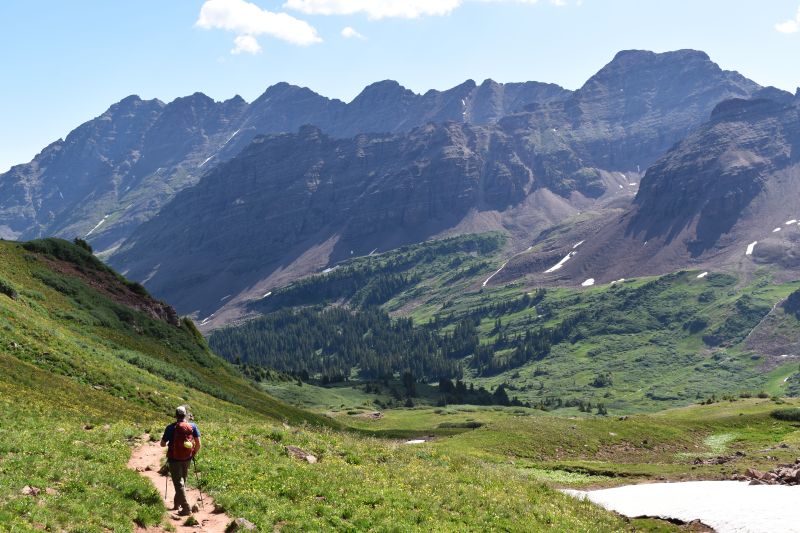
Testing the new Oboz Katabatic LT GTX in Colorado's Maroon Bells Wilderness
This post includes some affiliate links. You can support this site's free and independent content by clicking on these links and buying something. That's free for you—and keeps this site afloat
Oboz Katabatic LT Mid GTX Review
My Oboz Katabatic LT Mid GTX review digs into my personal experiences with this boot's support, weight, fit, comfort, traction, weather protection, and overall value. Since this is a lightweight hiking boot designed for fast hikes with light packs, my test hikes emphasized fast-moving fitness hikes in the Albuquerque foothills and moderate day hikes in the Sandia Mountains, including the Piedra Lisa, La Luz, Embudito, and 3 Guns Spring. My pace varied from moderate (2+ mph) to fast (3+ mph) to evaluate its performance. Plus, I surprisingly chose the Katabatic LT for my Maroon Bells hikes to test its performance on a tougher alpine hike (11 miles, 3000+ ft elevation gain.)
As always, my reviews are 100% independent and based on first-hand use. I'm the former footwear manager at an outdoor gear shop who tests hiking footwear more than 1000 miles every year, so you can trust my personal reviews and recommendations.
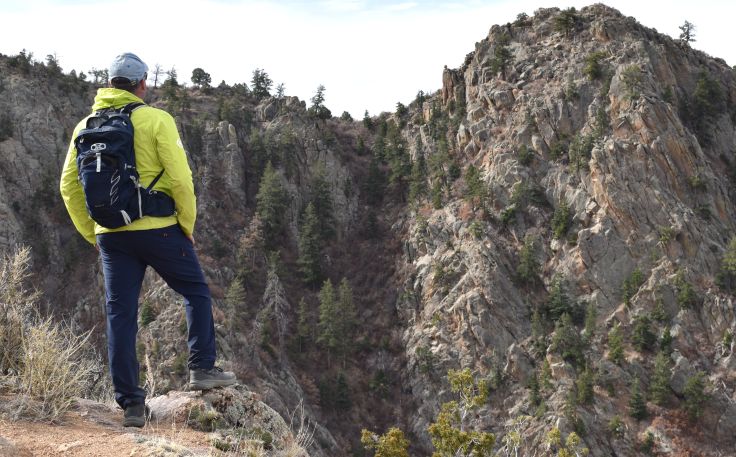
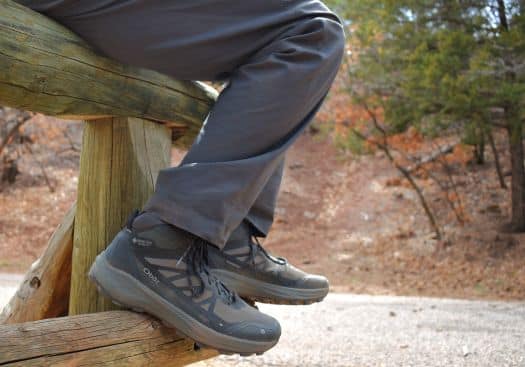
Testing the Katabatic's comfort and support in the Sandia Mountains
Support
Oboz is best-known for durable, supportive hiking boots. In contrast, the Katabatic LT Mid dials down the support to emphasize weight savings over protection. It may be a mid-cut, but there's limited ankle support. Those ankle collars aren't tall enough or sturdy enough to put up much of a fight. That being said, I tested this boot while recovering from a sprained right ankle and only had one painful misstep on the moderate trails I hiked.
The foot support is pretty good for a lightweight hiking boot. With a TPU rockplate under 3/4 of the boot, the Katabatic LT is stiff through the midfoot with moderate flex at my feet's natural flex point. That's a good build for well-maintained trails and moderate mountain terrain—even though Oboz built this boot for less technical trails. The Katabatic adds some arch support, too. There's also moderate torsional rigidity, which assisted my injured ankle on side hill trails that put considerable pressure on the outside of my downhill leg.
Overall, there's plenty of support for its recommended use—fast hikes with a light backpack or day pack. I even pulled off a tough, round-trip hike in the Maroon Bells in the Oboz Katabatic LT, hiking 22 miles with more than 6000 feet of elevation gain over two days.
Weight
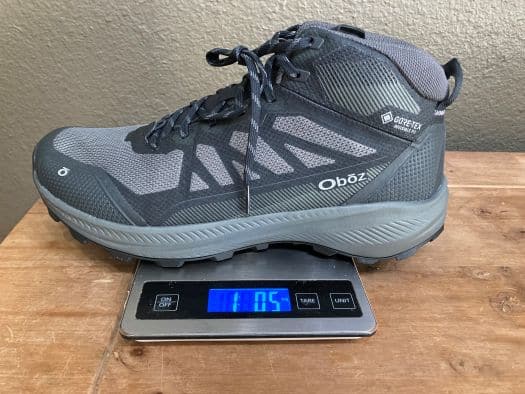
The Oboz Katabatic LT Mid makes the cut for a lightweight hiking boot. My pair (men's 12-wide) weighs 2 lb 1 oz—basically tied with the Salomon Cross-Hike 2 as the lightest hiking boot in my (extensive) collection. Compared with my favorite lightweight hiking boots, the new Katabatic is 1.4 ounces lighter than the new Salomon X Ultra 5 Mid GTX and 1.9 ounces lighter than the Topo Trailventure 2. If weight savings matters most to you, the Oboz Katabatic LT Mid GTS should be on your short list. It's legit lightweight.
Fit
As the former footwear manager at Appalachian Outdoors, I've always appreciated Oboz's fit. It's snug in the heel to prevent feet from sliding forward with standard width in the forefoot. Plus, it offers its best-sellers in wide, which adds more width in the forefoot and toe box (while maintaining a snug heel pocket). That means most men and women can find a good fit in this brand in either the regular or wide size.
The Katabatic LT Mid shares this fit with moderate to high volume throughout the uppers. I have moderately wide feet and wear a men's 11.5 in my everyday shoes. I got a great hiking fit in the men's 12 wide. This boot's waterproofing—GORE-TEX Invisible Fit—also left a little extra room for my toes compared with my boots with Oboz's proprietary BDry waterproofing.
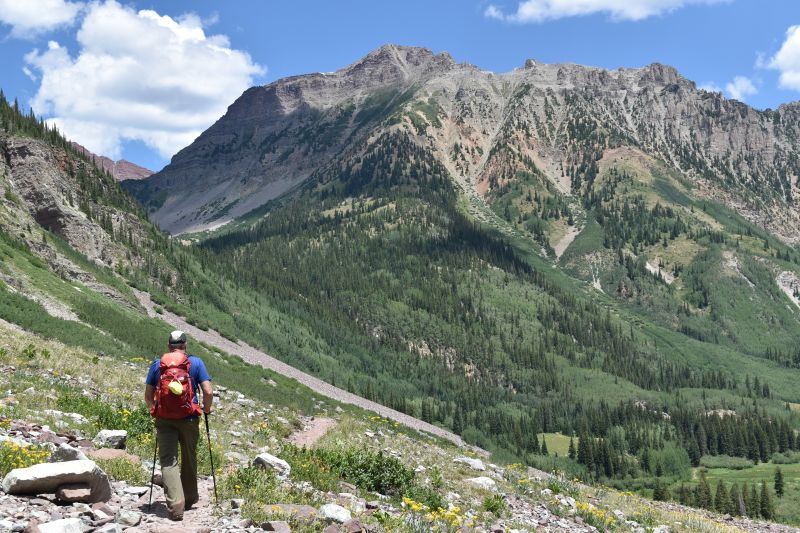
I hiked comfortably in the Katabatic LT GTX for 22 miles in Colorado
Comfort
Comfort has a lot to do with fit, your hiking style, and your personal preferences. I've already noted this boot's versatile fit—and that it's made for fast hikers with little to no weight on their backs. If you prefer a lighter hiking boot with moderate cushioning, you'll probably like the feel of the Oboz Katabatic LT. My hiking feet felt comfortable throughout my 4-8 mile day hikes in the Sandias. My feet also felt relatively fresh on both of my 11-mile Maroon Bells hikes.
Unlike most Oboz, this lightweight sticks with flimsier Ortholite insoles. They're not as supportive as the brand's typical O-Fit insoles but improve the boots' breathability.
If you're after a sturdier, more supportive feel, you might prefer Oboz's flagship hiking boot, the Bridger. In the lightweight category, the HOKA Trail Code has more cushioning, and the Topo Athletic Trailventure 2 has a wider toe box. But I think Oboz got the build right here for a lightweight fast-packing and day-hiking boot.

GORE-TEX Invisible Fit is a waterproofing plus
Weather Protection
The Oboz Katabatic LT Mid GTX is the first mid-cut hiking boot to incorporate GORE-TEX Invisible Fit waterproofing. Invisible Fit isn't a waterproof bootie—it's bound directly to the inside of the boot's uppers, making the waterproofing less bulky and more breathable than traditional GORE-TEX. On my test hikes, I did indeed notice the more streamlined fit and a possible increase in heat and moisture vapor transfer. As long as this technology holds up in a mid-cut (which was tricky for GORE-TEX to pull off), this is a clear plus in the waterproofing department. The GORE-TEX ("GTX") version of the Katabatic is an upgrade over Oboz's proprietary ("BDry") waterproofing. Go for the GTX model if you want this boot in a waterproof style.
So far, my test hikes have been dry, other than some trickles and puddles of snowmelt up in Embudito Canyon, where my feet stayed 100% dry. Once the drought ends here, I'll update this post with additional notes on the Katabatic's performance in more significant water and snow. But I have thousands of miles of reasons to trust GORE-TEX.
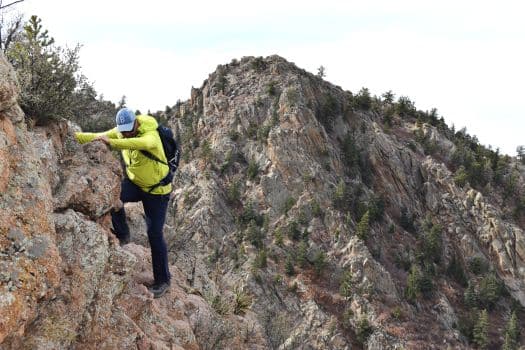
Testing traction with some rock scrambling on La Luz trail
Traction
I've tested the traction on the Oboz Katabatic LT Mid on sand, weathered granite, gravel, and rock, including some steep trails and switchbacks. So far, this boot's multisurface soles have held their own on my test hikes.
The tread has been especially good on steeper trails with weathered granite, sand, and gravel, such as the Piedra Lisa and 3 Guns Springs trails. The outsole has relatively deep and widely spaced lugs, so it can dig into those shifting sediments and mud. Scrambling rough rocks off the La Luz trail, I found the grip pretty reliable. Scrambling up smooth granite boulders in Embudito Canyon yielded mixed results. I was mostly confident when the rocks were dry, but the soles weren't as reliable on smooth rock when they were damp. Overall, my traction tests raised no red flags, even when I sought out slicker surfaces to test these soles' limits.
Value
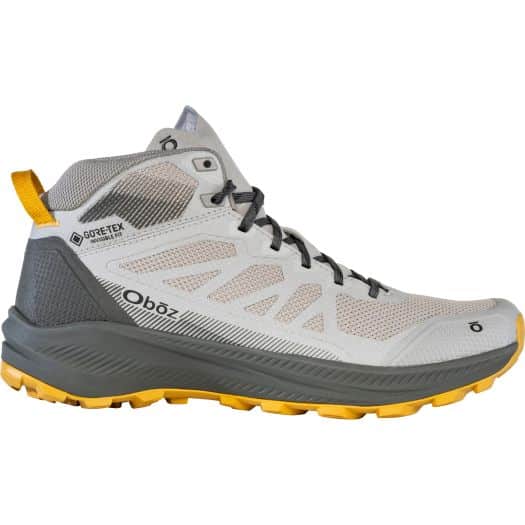
With a MSRP of $190, the Oboz Katabatic LT Mid GTX costs $5-10 dollars more than most of the lightweight hiking boots I recommend, such as the Topo Trailventure 2 ($180), Salomon X Ultra 5 Mid GTX ($185), and HOKA Trail Code GTX ($185). At the same time, it's $5 less than the HOKA Anacapa 2 Mid GTX ($195) and $30 less than the Scarpa Rush 2 Mid ($219). It's priced about right. Plus, it's the lightest of these lightweight hiking boots and comes with signature waterproofing, so you're getting some value for this price range.
Click on the buttons below to see current prices and colorways for men and women:
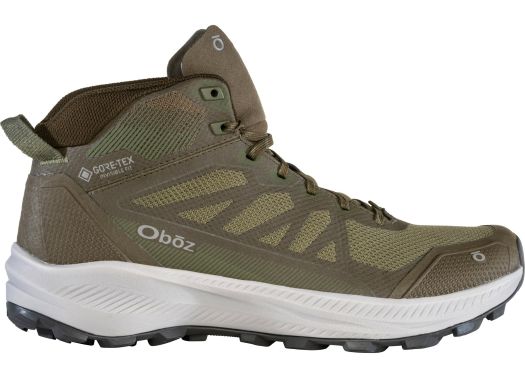
Men's Katabatic Mid LT GTX
Check current price, styles, and colors:
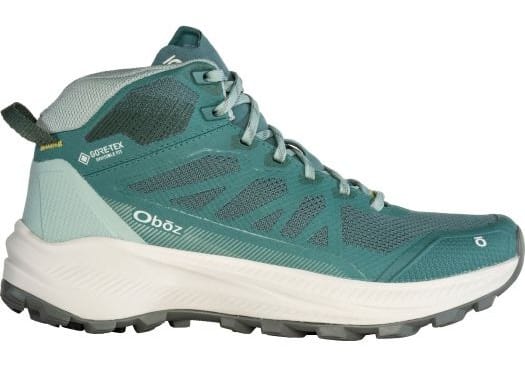
Women's Katabatic Mid LT GTX
Check current price, styles, and colors:
Oboz Katabatic LT Mid GTX: Pros and Cons
Based on my first-hand review, here are the pros and cons of the Oboz Katabatic LT GORE-TEX hiking boot:
Should you buy the Oboz Katabatic LT Mid GTX?
If you value weight savings in a hiking boot, the Oboz Katabatic LT Mid is the lightest hiking boot I've tested that can handle both well-maintained trails and moderate terrain. For me, this is more than a casual hiking boot. It's a lightweight hiking boot built for men and women who fly through the woods and move like mountain goats over moderate terrain. It's not made for monster trails with perilous footing. Still, its multi-surface tread should be more than fine on most types of trails. I think Oboz made all the right moves with the Katabatic LT. If you're a fastpacker, typical day hiker, or hut-to-hut traveler, this is a well-made, lightweight hiking boot in my book. I've now added it to my list of the best lightweight hiking boots for 2025.
Men's Katabatic Mid LT GTX
Check current price, styles, and colors:
Women's Katabatic Mid LT GTX
Check current price, styles, and colors:
Conclusion
Are you interested in the Oboz Katabatic LT Mid GTX? If so, you can support Hiking Feet's free and independent content by purchasing your shoes through the buttons above. That's free for you, but REI may share a small percentage of the sale with Hiking Feet. Those small commissions keep this site afloat, pay for the shoes I review, and give me a little bit back for all the unpaid hours I spend testing and reviewing footwear for men and women who hike. Thanks!
